Flag of France Cross Stitch Pattern Review
As an experienced embroidery designer preparing for a busy weekend craft fair, I approach every new digital asset with a critical eye. It is not enough for a design to look good on a screen; it must translate into a tangible, sellable handmade product that catches the attention of shoppers walking past a booth. When evaluating the Flag of France Cross Stitch Pattern, my primary focus is on its commercial viability for small business owners, Etsy sellers, and boutique makers. This review breaks down how this specific graphic performs in real-world production scenarios, from fabric selection to final display.
First Impressions: Bold Heritage Meets Modern Versatility
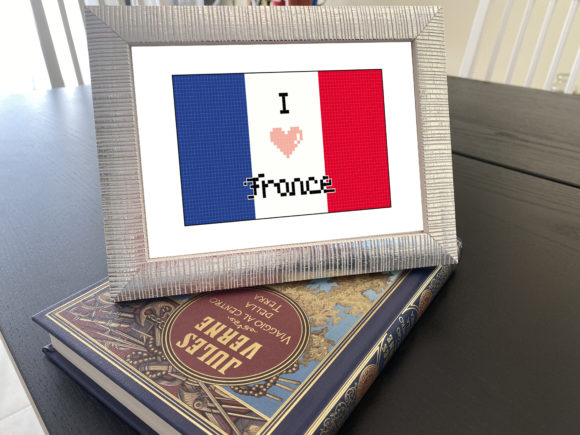
The Flag of France Cross Stitch Pattern immediately strikes me as a bold yet elegant choice. Unlike complex scenic illustrations, this design relies on strong color blocking and cultural recognition. In the context of Illustrations and Graphics, it sits comfortably between traditional folk art and modern minimalist decor. The defining feature noted in the product description—that the central writing can be omitted at will—is a massive selling point for commercial creators. This flexibility transforms a single embroidery file into multiple SKUs. Without text, it becomes a versatile symbol suitable for kitchenware and apparel; with text, it serves as a specific commemorative or educational piece. For a craft fair table, this adaptability means you can cater to both Francophiles and customers who simply appreciate the aesthetic of the tricolor without needing linguistic context.
Top Performing Products for Market Sales
When stocking a booth or updating an online shop, not every item sells at the same rate. Based on the geometry and visual weight of the Flag of France Cross Stitch Pattern, here is where I see the highest return on investment:
- Tea Towel Embroidery: This is arguably the strongest application. The vertical orientation of the flag mimics the natural hang of a towel. The cross-stitch texture evokes a rustic, farmhouse feel that pairs perfectly with linen or cotton waffle weave. Omitting the central text creates a clean, high-end kitchen accessory that appeals to home decorators.
- Tote Bag Design: Canvas market bags are craft fair staples. The bold blocks of blue, white, and red provide excellent contrast against natural unbleached canvas. Because the design is geometric, it remains legible even when the bag is slumped or carried. It functions as a stylish, reusable shopping bag rather than just a souvenir.
- Apron Embroidery: For culinary-themed markets, this pattern works beautifully as a chest accent on denim or canvas aprons. The ability to remove the text allows the flag to serve as a subtle nod to French cuisine without looking like a uniform. It adds perceived value to a basic blank apron.
- Embroidered Patches: Given the distinct color separation, this design is ideal for creating standalone patches. These can be sold as add-ons at the point of sale or applied to caps and pouches. The cross-stitch style gives the patch a handmade, artisanal quality that differentiates it from mass-produced military-style insignia.
Production Practicalities and Batch Efficiency
For a small shop product line, efficiency is key. The Flag of France Cross Stitch Pattern was created with professional software, which typically translates to better stitch optimization. However, cross-stitch emulation in machine embroidery requires careful management of stitch density. Because the design consists of solid color blocks, it can become dense quickly. When planning batch production for a fair, I recommend testing the run time. If the design is too dense, it may take too long to justify the price point on lower-margin items like pouches. Conversely, the lack of intricate shading or gradients makes thread changes predictable and fast, which is excellent for multi-needle machines or efficient single-needle workflows.
Photographing this design for Etsy seller listings is straightforward due to its high contrast. The three distinct colors photograph well without requiring extensive color correction. However, because cross-stitch patterns have a textured appearance, ensure your listing photos capture the physical dimensionality of the stitches. Flat scans do not sell embroidery; macro shots of the thread texture do. Use a printable mockup only for showing placement options, but always anchor your listing with images of the actual stitched finished product to manage customer expectations regarding texture and scale.
Critical Use Notes for Professional Results
While the design is versatile, there are specific technical constraints that must be respected to maintain quality:
- Fabric Texture Matters: Cross-stitch emulation relies on a grid-like appearance. On highly textured fabrics like terry cloth or thick fleece, the "cross" definition can get lost, making the design look muddy. Stick to smooth, tight-weave fabrics like quilting cotton, linen, or canvas for the crispest results.
- Stabilizer Selection: Due to the potential density of filled cross-stitch blocks, using the correct stabilizer is non-negotiable. A medium-weight cutaway is often safer than tear-away for tote bags and aprons to prevent puckering around the color block transitions. For tea towels, a wash-away topping helps keep the stitches from sinking into the weave.
- Text Legibility: If you choose to include the central writing, verify the size. Small lettering in cross-stitch fonts can become illegible if resized below the designer’s recommended minimum. Always test the smallest intended size before committing to a production run.
- Curved Surfaces: Be cautious when placing this rectangular design on curved surfaces like caps. The rigid geometry of a flag can distort visually on a rounded brim. If stitching on caps, consider hooping techniques that minimize distortion or opt for flat-brim styles.
Designer Checklist Before Selling
Before listing the Flag of France Cross Stitch Pattern as a craft fair product or digital download, complete this verification process:
- Verify Licensing: The product description mentions the pattern is part of a collection but does not explicitly state commercial licensing terms for finished goods. As a responsible business owner, you must confirm whether you have the right to sell physical items made from this digital embroidery file. Never assume commercial rights exist without documentation.
- Test Stitch on Scrap: Do not rely solely on software simulations. Run a test stitch on the exact fabric you intend to sell. Check for registration issues between the blue, white, and red sections. Gaps between color blocks can ruin the professional look of a flag design.
- Confirm Hoop Size Compatibility: Ensure the design fits within your machine’s maximum embroidery area with adequate margin for hooping. If resizing is necessary, do so using professional software to maintain stitch integrity, rather than relying on the machine’s onboard resizing which can alter density improperly.
- Thread Color Matching: National flags have specific color standards. While artistic interpretation is valid, customers buying French-themed items often expect accurate shades. Compare your thread colors against a reference to ensure the blue is navy and not royal, and the red is vibrant but not neon.
Enhancing Booth Display and Buyer Engagement
In a crowded market environment, the Flag of France Cross Stitch Pattern contributes to a cohesive brand narrative. Its classic aesthetic signals quality and tradition. To maximize engagement, group products by theme rather than type. Display the embroidered tea towels alongside French-style baked goods (if allowed) or vintage kitchenware to create a lifestyle vignette. The option to omit text allows you to create a "build-your-own" station where customers can choose between the plain flag or a version with personalized text, increasing interaction and dwell time at your booth.
Ultimately, this pattern represents a low-risk, high-reward asset for commercial embroidery businesses. Its professional origin suggests reliable digitizing, while its customizable nature supports diverse product lines. By respecting the technical requirements of cross-stitch emulation and leveraging the design's inherent versatility, makers can transform this digital graphic into a profitable staple of their handmade inventory. Whether you are stocking an Etsy shop or prepping for a summer market, this design offers the perfect blend of cultural charm and production practicality.