Skull and Sword Cross Stitch Pattern Review
As an embroidery designer developing a limited-edition capsule collection for a boutique brand, I am constantly evaluating digital assets that bridge the gap between traditional craft and modern streetwear. When reviewing the Skull and Sword Cross Stitch Pattern for potential adaptation into sweatshirt embroidery, my assessment goes far beyond simple aesthetics. I must determine if this specific graphic can withstand the rigors of commercial embroidery while retaining the handmade charm that defines our small shop product line. This review breaks down the technical viability, aesthetic placement, and commercial value of this design for fellow Etsy sellers, apparel decorators, and creative entrepreneurs looking to expand their custom apparel offerings.
First Impressions: Mood and Visual Hierarchy
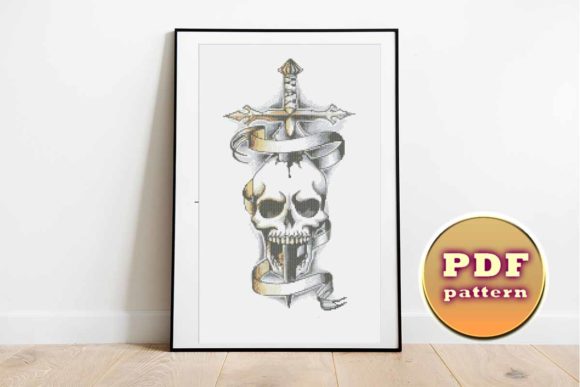
The immediate impact of the Skull and Sword Cross Stitch Pattern is one of bold, gothic nostalgia. Unlike minimalist line art often seen in fast fashion, this design carries significant visual weight. The layout suggests a vertical orientation, which is crucial when considering hoodie design placement or center-chest positioning on oversized sweatshirts. For a boutique brand, the mood strikes a balance between horror-adjacent edge and intricate craftsmanship. It does not feel like a generic clip-art graphic; rather, it possesses the structured integrity typical of high-quality cross stitch patterns adapted for textile application.
From a branding perspective, this design signals to customers that the finished product is intentional. The complexity implies a higher level of effort, whether executed as a true hand-stitched piece or translated into a machine embroidery design. For lifestyle product photography, the dense graphical nature of the skull and sword motif creates excellent contrast against neutral backgrounds, making it highly photogenic for Instagram feeds and Etsy listing thumbnails. It reads clearly even at a distance, which is essential for social media marketing where scroll-stopping power determines engagement.
Technical Evaluation for Sweatshirt Embroidery
Transitioning from a digital PDF horror xstitch file to actual fabric requires rigorous technical scrutiny. The specifications indicate a stitch area of 150w x 246h stitches on 14-count Aida, translating to approximately 27.21cm wide by 44.63cm high. For sweatshirt embroidery, this size presents both opportunities and challenges. On an adult unisex XL hoodie, this dimension works beautifully as a full-back piece or a substantial front panel. However, for smaller chest placements or sleeve accents, the design would require scaling down, which brings stitch density concerns to the forefront.
When adapting this for commercial embroidery on heavy fleece or French terry, stabilizer choice becomes non-negotiable. A design of this magnitude with 16 distinct color blocks requires robust support to prevent puckering on stretchy knit fabrics. I recommend using a combination of cut-away stabilizer and a water-soluble topping to maintain registration across all 16 colors. Without proper stabilization, the intricate details of the sword hilt or skull shading could become distorted during production, compromising the premium feel of the handmade product.
Furthermore, thread color contrast must be evaluated against the base garment. While the original pattern specifies white fabric, applying this to black, charcoal, or sage green sweatshirts will necessitate re-mapping the thread colors. Dark fabrics absorb light, meaning lighter thread shades may need to be brightened to achieve the same visual pop seen in the printable mockup. As an experienced designer, I always test stitch a segment of complex color block designs before committing to a full production run to ensure the palette translates correctly from screen to textile.
Aesthetic Versatility Across Apparel Styles
One of the strongest selling points of the Skull and Sword Cross Stitch Pattern is its versatility across different garment silhouettes. For a rustic or vintage-inspired boutique brand, stitching this onto a cream or oatmeal-colored heavyweight sweatshirt creates a cozy, heritage aesthetic. The pixelated nature of cross stitch softens the "horror" elements, making the design approachable and wearable for everyday fashion rather than just niche subculture events.
Conversely, placing this design on a pastel pink or lavender oversized hoodie creates a striking juxtaposition that is currently trending in alternative fashion markets. This "soft grunge" aesthetic performs exceptionally well for Etsy sellers targeting Gen Z and Millennial demographics who appreciate irony and mixed signals in their wardrobe. The design feels decorative yet substantial, avoiding the cheapness sometimes associated with mass-produced graphic tees. Whether used as a statement back piece or scaled for a subtle left-chest logo position, the geometry of the skull and sword maintains its structural integrity.
Commercial Viability and Brand Value
For small business owners and digital sellers, the value of an embroidery file extends beyond the stitch count. It lies in the perceived value it adds to the final merchandise. The Skull and Sword Cross Stitch Pattern offers a distinct advantage over standard vector graphics because of its inherent texture. Even when digitized for machine use, the cross-stitch origin provides a tactile quality that customers associate with artisanal labor. This perception justifies a higher price point for custom apparel compared to printed alternatives.
However, creators must be mindful of licensing and usage rights. Before integrating this design into a boutique brand collection, verify whether the purchase includes commercial rights for physical products or if it is restricted to personal use. Additionally, check the included file formats. While the product description highlights the PDF pattern for hand stitching, those utilizing embroidery machines must confirm if a compatible digital embroidery file (such as DST, PES, or EXP) is included or if the pattern must be professionally digitized. Professional digitizing ensures optimal stitch paths and reduces thread breaks, which is vital for maintaining efficiency in a production environment.
Practical Considerations for Production and Sales
Integrating this design into a seasonal drop requires careful planning regarding hoop size and fabric compatibility. The 27cm width exceeds standard 4x4 hoops, necessitating a 5x7 or larger multi-position hoop setup. For shops without large-format capabilities, consider splitting the design or offering it exclusively on larger garments where hoop marks are less likely to appear in visible areas. Always communicate care instructions clearly to buyers; high-stitch-count designs on knits require gentle washing cycles to preserve the embroidery's longevity.
Finally, consider how this design fits your broader brand identity. Does the Skull and Sword Cross Stitch Pattern align with your existing catalog? If your shop focuses on floral botanics, this might serve as a successful seasonal pivot for Halloween or winter collections. If you specialize in dark academia or cottagecore, it reinforces your niche authority. Successful Etsy sellers know that cohesive design assets build customer trust and encourage repeat purchases. By treating this pattern not just as a graphic but as a foundational element of a curated apparel line, you elevate your business from simple crafting to professional fashion design.
- Fabric Compatibility: Best suited for medium-to-heavyweight knits; avoid thin jersey due to stitch density.
- Stabilization: Mandatory cut-away backing plus topping for crisp definition on fleece.
- Color Mapping: Re-evaluate all 16 color blocks when switching from white to colored garments.
- Placement Strategy: Ideal for full back or center chest; scale with caution for cuffs or sleeves.
- Market Positioning: Leverages the "handmade" aesthetic to justify premium pricing in boutique markets.