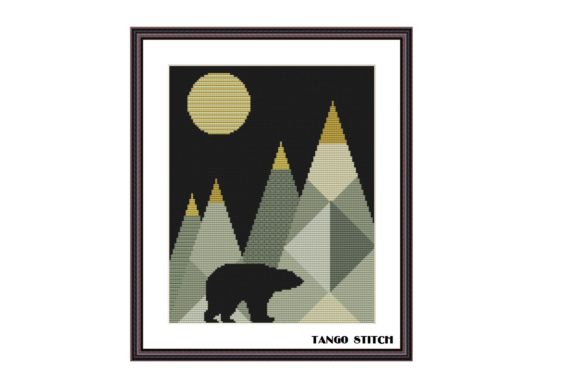
Wild Bear at the Mountains Cross Stitch Review
As an embroidery designer preparing for a weekend craft fair, my primary concern is always viability. I need designs that not only look beautiful on a screen but translate effectively into physical handmade products that customers actually want to buy. When evaluating the Wild Bear at the Mountains Cross Stitch, I am looking at more than just a pretty picture; I am assessing a potential bestseller for my booth. This design, described as a geometric landscape ornament using only full stitches, presents a unique opportunity for makers targeting the modern rustic and outdoor enthusiast demographics. My review focuses strictly on how this specific machine embroidery design performs in a commercial, small-batch production environment.
First Impressions: Modern Rustic Appeal
The immediate visual impact of the Wild Bear at the Mountains Cross Stitch strikes a balance between traditional folk art and contemporary minimalism. The use of geometric shapes to depict a natural scene moves it away from overly cutesy nursery aesthetics and toward a sophisticated, gender-neutral style. For a craft fair product, this is crucial. It feels bold yet accessible, making it suitable for a wide age range. The "abstract" nature mentioned in the description suggests clean lines and distinct color blocking, which typically reads better from a distance at a busy market table than intricate, realistic shading. This design feels premium and intentional, avoiding the cluttered look that can sometimes plague complex landscape patterns. It signals to the buyer that this is a curated piece of decor rather than a generic clip-art application.
Best Product Applications for Market Sales
Not every design works on every substrate. Based on the geometric and full-stitch construction of the Wild Bear at the Mountains Cross Stitch, I have identified specific high-potential applications for my upcoming market setup:
- Tote Bag Design: This is likely the strongest performer. Canvas totes provide a stable, flat surface ideal for cross stitch aesthetics. The geometric bear serves as a central focal point that is visible even when the bag is slung over a shoulder. As a tote bag design, it appeals to hikers, readers, and eco-conscious shoppers.
- Tea Towel Embroidery: Flour sack towels or linen blends are excellent candidates. The design’s likely moderate density prevents the towel from becoming stiff or puckered. A mountain theme resonates deeply in kitchenware, evoking cabin vibes and cozy mornings.
- Embroidered Patch: Because the design uses full stitches and geometric forms, it translates exceptionally well into patches. Patches are high-margin add-ons at craft fairs. Customers who cannot afford a finished bag will often purchase a patch of the same design to customize their own gear.
- Apron Embroidery: For a boutique maker, placing this design on a denim or canvas apron creates a cohesive collection. The rustic theme aligns perfectly with culinary and gardening aprons, increasing the perceived value of the garment.
Conversely, I would be cautious about using this specific graphic on curved surfaces like caps unless the design size is significantly reduced and tested, as geometric lines can distort easily on uneven terrain.
Production Viability and Batch Efficiency
Time is money when running a small shop product line. The fact that the Wild Bear at the Mountains Cross Stitch uses only full stitches is a massive advantage for production speed. Full stitches generally run faster than satin stitches or complex fill patterns because there are fewer trims and direction changes. This makes the embroidery file highly repeatable for batch production. I can confidently hoop multiple tea towels or tote bags and run them back-to-back without constant machine babysitting.
From a photography standpoint, geometric designs with solid color blocks photograph beautifully for Etsy seller listings. They do not suffer from moiré effects or blurring in digital thumbnails. This clarity helps create accurate printable mockups and listing photos that represent the true texture of the thread. When customers see clear, sharp geometry in a photo, they trust that the finished product will match their expectations. Furthermore, the abstract nature allows for easy color swapping. If I want to offer a seasonal variation—perhaps changing forest greens to autumn oranges—the blocky structure of the design makes recoloring in digitizing software straightforward and fast.
Critical Technical Considerations
Despite its apparent simplicity, any digital embroidery file requires scrutiny before hitting the start button. While the description notes suitability, I must verify specific technical parameters to avoid costly mistakes:
- Stitch Density: Even with full stitches, overlapping areas in geometric mountains can become bulletproof if not properly compensated. On lighter fabrics like tea towels, excessive density causes tunneling. Always check the density map before stitching on final goods.
- Fabric Texture Interaction: Cross stitch emulation relies on grid alignment. If stitching on textured linen or waffle weave, the fabric's weave might fight the stitch grid. Using a water-soluble topping is non-negotiable here to keep those geometric lines crisp.
- Size Limitations: Geometric details have a minimum threshold. If I attempt to shrink the Wild Bear at the Mountains Cross Stitch down to a 2-inch pocket logo, the internal details of the bear may merge into a solid blob. Test the lower size limit to ensure clarity.
- Thread Colors: Abstract designs rely heavily on contrast. Ensure the selected thread palette provides enough separation between the bear, the mountains, and the background. Low-contrast tones may look elegant on screen but disappear on fabric.
Designer Notes for Commercial Success
Before listing this as a commercial embroidery offering or selling finished goods at a fair, I follow a strict validation protocol. First, I never trust the screen simulation implicitly. I always stitch out a test on scrap fabric that matches the weight and weave of my intended final product. This reveals tension issues or registration errors that software cannot predict.
I also verify the hoop size requirements against my available equipment. If the design pushes the limits of my largest hoop, I risk framing issues. It is often safer to resize slightly inward to guarantee consistent tension across the entire field. Additionally, checking the licensing terms is mandatory. Just because a file is purchased does not always grant unlimited commercial rights for finished products. Confirming these legalities protects my business reputation.
Finally, I create at least one real-world sample for the booth. Digital mockups are useful for online sales, but craft fair customers need to touch the texture. Seeing the sheen of the rayon or the matte finish of cotton thread on the actual Wild Bear at the Mountains Cross Stitch converts interest into sales. I place this sample at eye level, ensuring the lighting highlights the dimensionality of the stitches. By treating this graphic not just as art, but as a manufacturable asset, I maximize its potential to drive revenue for my handmade business.
Elevating Brand Consistency
Incorporating the Wild Bear at the Mountains Cross Stitch into my inventory helps solidify a cohesive brand identity. For creative entrepreneurs, having signature designs that recur across different product types builds recognition. When a customer sees the same geometric bear on a pillow cover, a pouch, and a wall hanging, it reinforces the professional quality of the shop. This consistency transforms individual items into a collectible series. Whether you are a digital seller providing the assets or a boutique maker producing the goods, respecting the integrity of the design through proper stabilization, appropriate sizing, and thoughtful product selection ensures that this pattern remains a profitable staple in your cross stitch patterns catalog.